Grinders
Single-dose grinding, burr geometry, particle distribution, retention and alignment. Flat versus conical, and what actually reaches the cup.
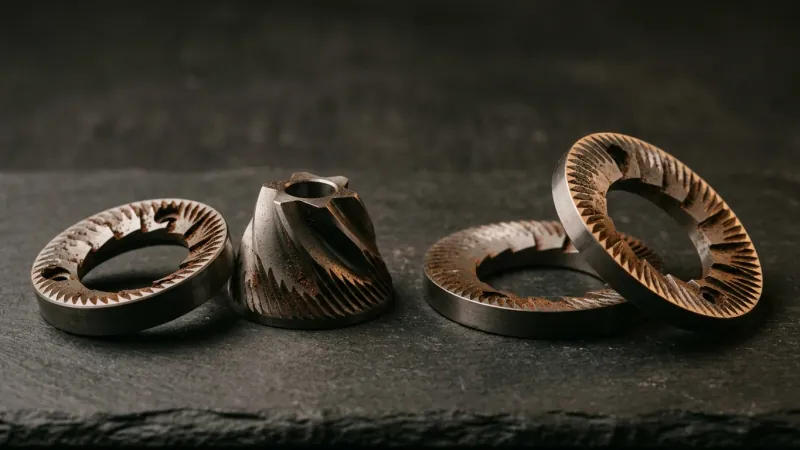
Conical vs flat burr grinders: right on average, a poor guide to your grinder
Every page on this question repeats the same rule: conical for body, flat for clarity; conical cooler, quieter and cleaner. Not one shows a measurement. The largest set I could find holds the rule up on average and shows how little it says about any single grinder — and in its blind final, a conical came first and the other conical came last.
SCA certified grinders: the standard exists, the list is empty
The SCA has had a certification standard for home grinders since 2022 and has never listed a grinder under it. This summer a 'Home Filter Grinders' tab appeared on its certification page; it is now hidden, and the only thing behind it is a coffee maker. The one lab that approves home grinders is the lab the SCA sends its own tests to — and its version of the test asks for more.
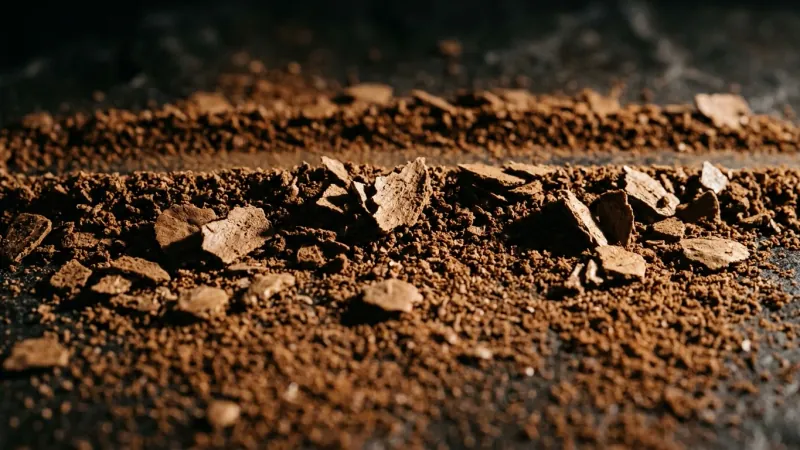
Coffee grind size chart: the numbers, and where they came from
Two of the most-linked grind charts on the internet disagree by 300 microns on the same brewing method, and one of them sources its numbers to reader feedback. Meanwhile the three documents that were obliged to define a coffee grind — two standards and a brewer certification test — all refuse to give a single number, and the one lab that published measured medians for drip put them where the charts say French press.
Does grind size affect coffee flavour? Yes — but not the way you were told
Every page answering this question gives you the same paragraph about surface area and over-extraction, and none of them gives you a size. The experiments that did measure it found something more useful and less flattering: in drip, a grind change large enough to move strength by a fifth was not reliably detectable, while the shape of the brew basket was. And bitterness, in the study that separated the two, tracked concentration rather than extraction.