Extraction Science
The physics and chemistry of the shot: pressure and flow profiling, TDS and extraction yield, puck preparation and channelling.
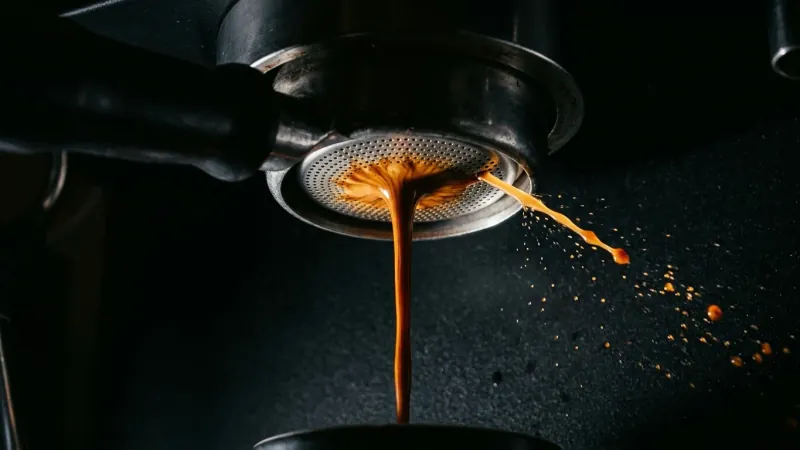
Espresso channeling: the instability that is running in every shot
Every guide treats channeling as a fault you either have or you don't, caused by grind, distribution or tamp. The published physics says something stranger: uneven flow between pathways is always present, it feeds on itself, and for most of a shot it hides behind an average that looks fine. Here is the causal chain, from the first 6.7 seconds of wetting to what the spent puck looks like under an x-ray.
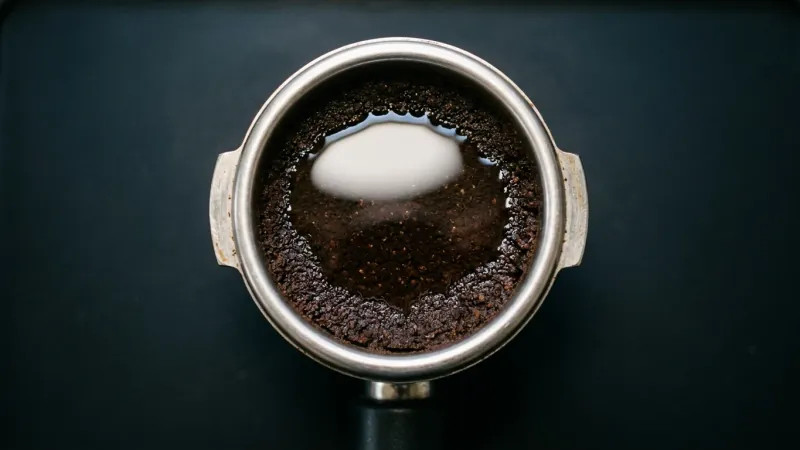
Why is my espresso puck wet? The 21 grams nobody mentions
Every page on this search tells you a wet puck means your grind or your tamp is wrong. A measurement nobody cites says otherwise: on a commercial machine at a verified 9 bar, a 20 g puck holds 20.85 grams of water — and that figure did not move when the burrs went from new to worn out. Here is what is actually in the basket, what removes it, and what the removal costs.
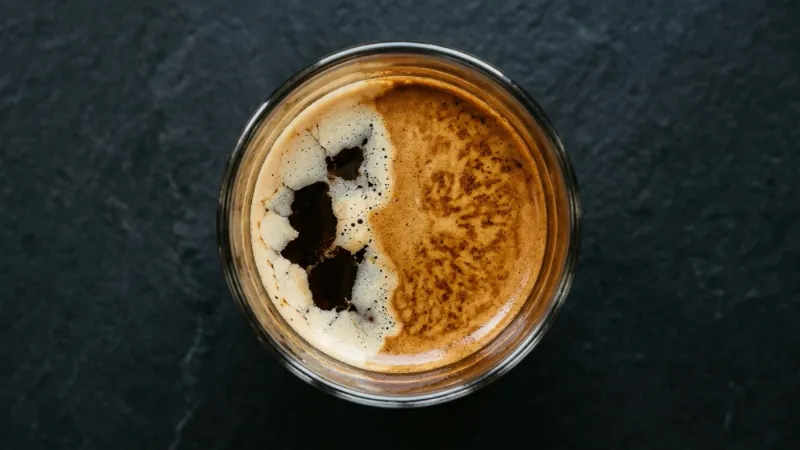
Why is my espresso sour or bitter? Start with the shot that is both
Every page answering this question gives you two opposite instructions and names no compound — except one, which names the wrong one. The molecules that make espresso bitter were isolated from real brewed coffee and they are neither caffeine nor tannin: they are made during roasting, and their taste thresholds have been measured. Sourness turns out not to be the same thing as pH. And the shot most people actually have — sour and bitter at once — is the one case none of those pages addresses, even though its mechanism is published.
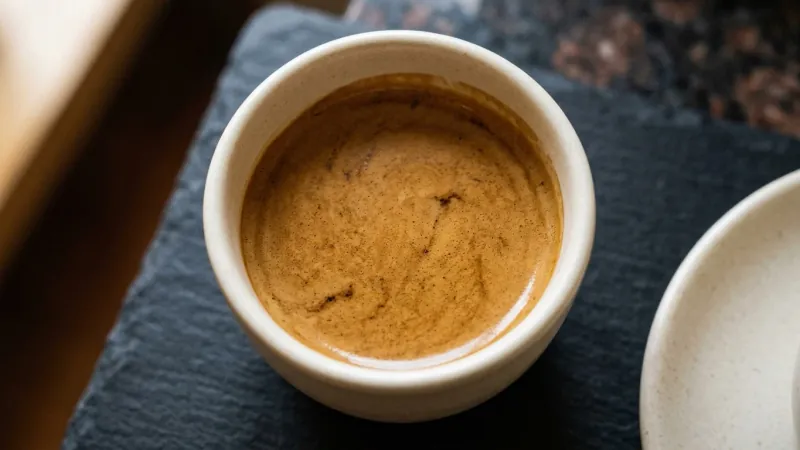
What is crema — and what it doesn't tell you about your espresso
Crema is carbon dioxide that was dissolved under pressure and had nowhere to go when the pressure dropped. That makes it a good gauge of how much gas your coffee still had — roast degree, days since roasting, minutes since grinding — and a poor gauge of everything else. In one experiment the thickest foam collapsed fastest, and the strongest cups had the shortest-lived crema.

What is coffee extraction? The definition, the number, and four things everyone gets wrong
Extraction is one number: how much of the dry coffee ended up in the liquid. Around 30% of a roasted bean can dissolve at all, and the famous window uses two-thirds of it. The parts everyone repeats — that flavours come out in a fixed order, that a 30-second bloom is settled science, that a shot should take 25 to 30 seconds — are the parts the research does not support.
Is your coffee maker really hitting 18–22% extraction? How to check for yourself
The two numbers everyone quotes come from a 1957 paper. The standard SCA certifies coffee makers against today quotes neither of them — it asks for a brew strength of 1.15–1.55%, which is a wider window than the one on the chart. Here is how to measure your own brew, and how much the target is worth once you have.