Filter & Brewing
Pour-over, immersion and cold brew — grind, temperature, agitation and the paper itself.
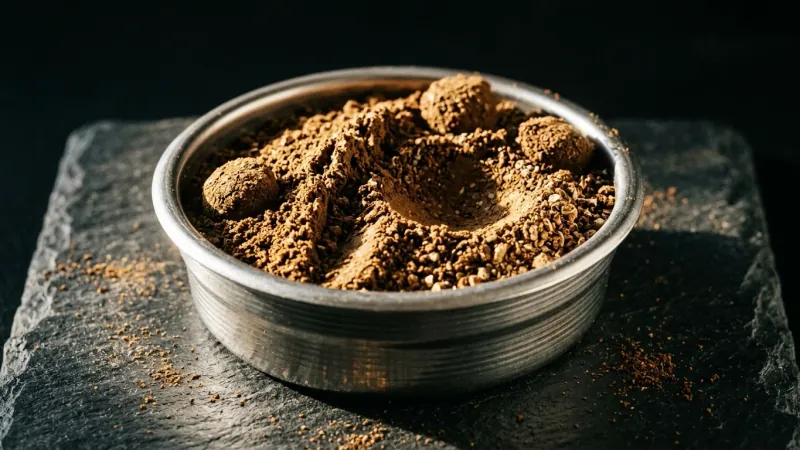
Espresso puck prep: what WDT, distribution tools and tamping actually do
The espresso world sells three puck prep tools and has run a controlled trial on one of them — which lost. The peer-reviewed literature says the tamp exists to level the bed, not to compress it, and the arithmetic says why: the pump presses the puck about twelve to twenty-four times harder than your hand can. Here is what has actually been measured, including the study that made a puck deliberately uneven and got a more stable shot.
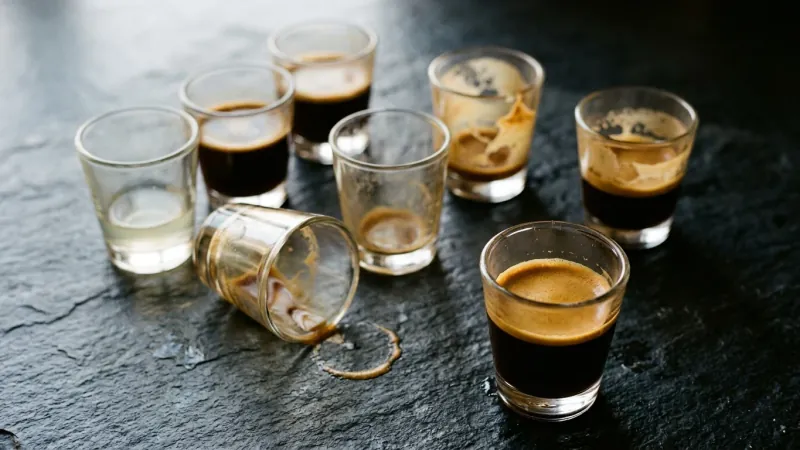
How to dial in espresso, when the recipe everyone gives you is a survey result
Every dial-in guide converges on the same recipe, and none of them says where it came from. It came from a survey: in 2017 the SCA asked 275 baristas what they actually do, and published the averages. The definition those averages were measured against defines grind size circularly — the right grind is whatever hits 20 to 30 seconds — and the only mathematical model of espresso says to ignore brew time entirely, because past a certain fineness, grinding finer extracts less and varies more. That is the part that wastes beans.
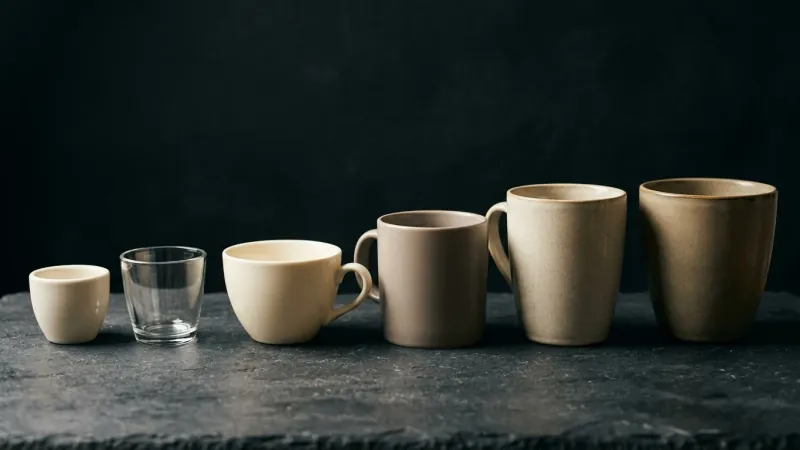
How many grams of coffee per cup? First, whose cup?
There is no answer to this question until somebody says what a cup is, and the kitchen holds at least six different ones — from the 125 ml a Moccamaster counts to the 240 ml the FDA defines. On one certified machine, the only thing called a cup is 5 oz while the smallest drink it pours is 8. The answerable question is grams of coffee per gram of water, and the number of published answers to that is smaller than the internet suggests: the SCA has exactly one, and the document it is usually credited to does not contain it.